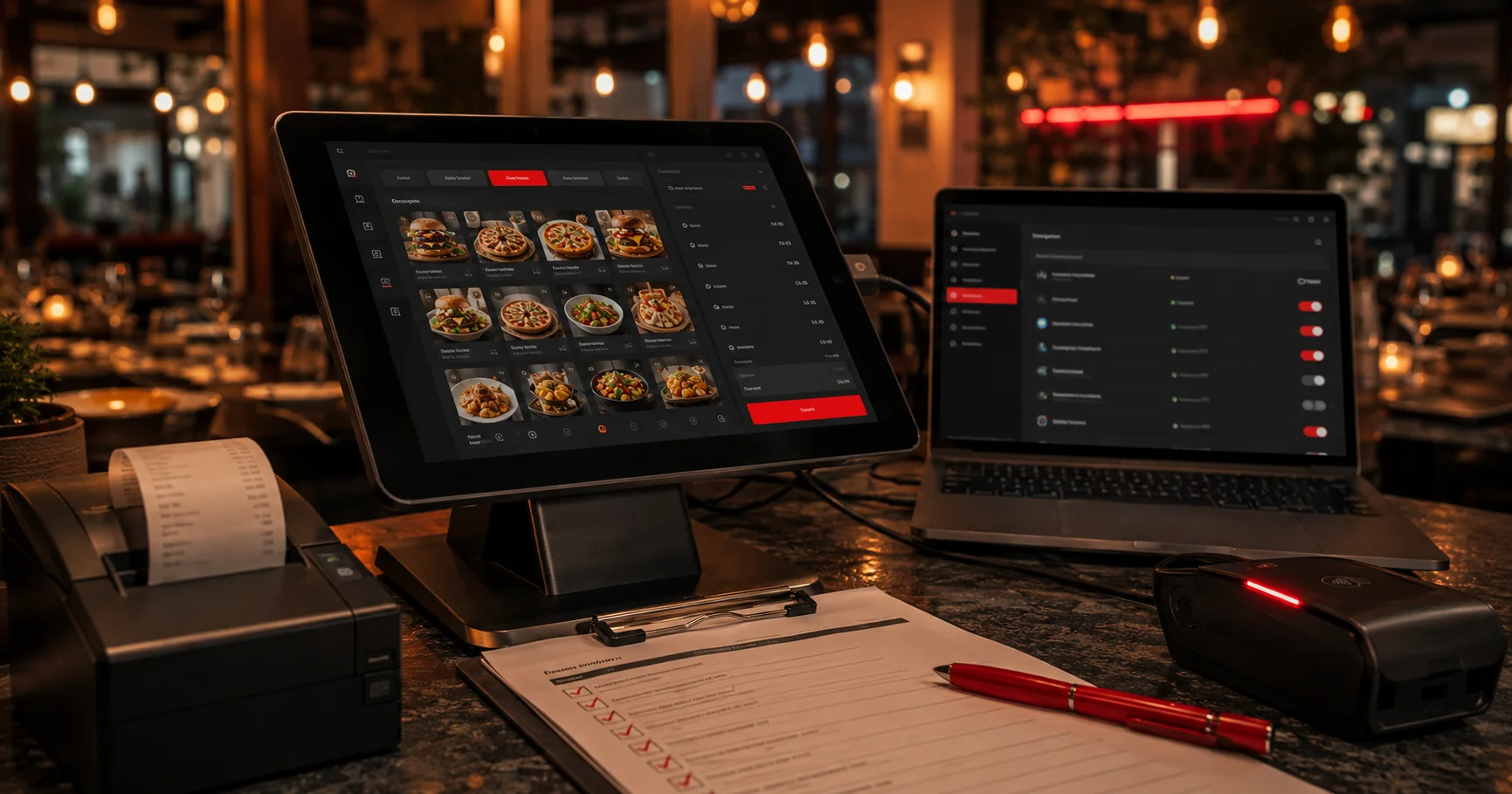
Your restaurant POS system should be the central nervous system of your entire operation—connecting delivery platforms, loyalty programs, inventory management, and marketing automation into one seamless ecosystem. Yet most restaurants use their POS as little more than a glorified cash register, leaving massive efficiency gains and revenue opportunities on the table.
After implementing POS integrations for restaurants across USA, UK, Canada, and Australia, I've seen firsthand how proper integration transforms operations, reduces labor costs by 20-30%, eliminates manual data entry errors, and enables data-driven decision making that drives profitability.
This comprehensive guide walks you through integrating your POS (Square, Toast, Clover, or other major systems) with delivery platforms, loyalty programs, and marketing tools—unlocking operational efficiency and revenue growth most restaurants never achieve.
Need Professional POS Integration Setup?
I help restaurants implement and optimize POS integrations across all major platforms. Let's build your integrated tech stack.
Get Integration HelpWhy POS Integration Matters More Than Ever
The restaurant technology landscape has exploded. Ten years ago, you had a POS and maybe a reservation system. Today, successful restaurants manage delivery platforms, online ordering, loyalty programs, inventory systems, labor scheduling, and marketing automation—often across multiple disconnected systems.
The Cost of Disconnected Systems
Without integration, restaurants face:
- Manual Data Entry: Staff spending 5-10 hours weekly manually entering orders from delivery tablets into POS
- Inventory Errors: Overselling items that are actually 86'd, disappointing customers and wasting marketing spend
- Reporting Chaos: Fragmented data across systems making actual profitability analysis impossible
- Customer Experience Issues: Loyalty points not applying to delivery orders, inconsistent pricing across channels
- Lost Revenue: Inability to track customer lifetime value or automate marketing based on purchase behavior
Restaurants in competitive markets like New York, London, or Toronto can't afford these inefficiencies. Integration isn't optional—it's competitive necessity.
The Power of Integrated Systems
Proper POS integration delivers:
- Automatic order routing from all channels (dine-in, delivery, pickup) to kitchen without manual entry
- Real-time menu synchronization across all platforms when items are 86'd
- Unified customer database tracking behavior across all touchpoints
- Automated marketing triggers based on purchase patterns
- Comprehensive reporting showing true profitability by channel, item, and customer segment
Delivery Platform Integration
Integrating your POS with delivery platforms (UberEats, DoorDash, Deliveroo) eliminates manual order entry while synchronizing menus and inventory in real-time.
How Delivery Integration Works
When properly integrated:
- Customer places order on UberEats
- Order automatically appears in your POS kitchen display system
- Kitchen prepares order with zero manual data entry
- Order completion updates delivery platform automatically
- All sales data flows into unified reporting
This eliminates delivery tablets entirely in some systems, or reduces them to confirmation-only devices.
Major POS Systems and Delivery Integration
Toast POS: Native integrations with DoorDash, UberEats, Grubhub through Toast Delivery Services. Orders flow directly into Toast KDS without separate tablets.
Square POS: Integrates with major delivery platforms through Square Online. Less seamless than Toast but functional for most operations.
Clover: Third-party integration apps available through Clover marketplace. Requires middleware but works across all major platforms.
TouchBistro: Strong delivery integration through partnership with major platforms. Popular in Canadian market.
Menu Synchronization Benefits
The killer feature of delivery integration is menu sync. When you 86 an item in your POS, it automatically becomes unavailable on all delivery platforms within seconds. No more awkward phone calls canceling orders for items you don't have.
Price changes made in POS propagate across all channels automatically, ensuring consistency without manual updates on 4-5 different platforms.
Loyalty Program Integration
Integrated loyalty programs track customer purchases across all channels—dine-in, delivery, takeout—creating unified customer profiles that drive targeted marketing and repeat business.
Building Effective Loyalty Integration
Choose loyalty platforms that natively integrate with your POS:
Toast Loyalty: Seamless integration with Toast POS, works across all ordering channels
Square Loyalty: Built directly into Square ecosystem
LoyaltyLion, Punchh, Thanx: Third-party platforms with robust POS integrations
Cross-Channel Point Accrual
Proper integration ensures customers earn points whether ordering through:
- Dine-in via POS
- Online ordering on your website
- Delivery platforms (when phone number matches)
- Mobile app orders
This unified tracking dramatically increases program engagement. Customers ordering through delivery platforms represent 40-60% of modern restaurant revenue—excluding them from loyalty benefits leaves massive value on table.
Automated Marketing Triggers
Integrated loyalty enables powerful automated marketing:
- Lapsed Customer Win-Back: Automatic email sent when customer hasn't ordered in 30 days with personalized offer
- Birthday Promotions: Automatic special offer sent on customer birthday
- Tier Advancement: Notification when customer reaches new loyalty tier with exclusive perks
- Purchase-Based Triggers: "You loved our pasta last time, try our new seasonal risotto!"
These automations drive 15-25% incremental revenue from existing customer base with zero ongoing manual effort.
Maximize Your POS Investment
I help restaurants select, implement, and optimize POS integrations for delivery, loyalty, and marketing automation. Let's build your integrated system.
Get Expert HelpInventory and Supply Chain Integration
Connecting inventory management to your POS enables automatic ordering, waste reduction, and real-time cost tracking that protects margins.
Real-Time Inventory Tracking
As items are sold through POS, inventory automatically decrements. When ingredients hit reorder points, purchase orders generate automatically and send to suppliers.
Popular integrated inventory systems:
- MarketMan: Comprehensive inventory, ordering, and invoice management
- BlueCart: Streamlined supplier ordering with POS integration
- xtraCHEF: Invoice automation and recipe costing integration
Recipe Costing and Margin Protection
Advanced integration tracks ingredient costs in real-time. When beef prices spike 20%, you immediately see which menu items' margins are suffering and can adjust pricing accordingly.
Without integration, you discover margin erosion weeks later when analyzing reports—by which point you've sold hundreds of items at unprofitable prices.
Marketing Automation Integration
Your POS data is marketing gold. Integrated marketing automation uses purchase behavior to send targeted campaigns that drive revenue.
Email Marketing Integration
Connect POS with email platforms (Mailchimp, Klaviyo, Constant Contact) to:
- Automatically add new customers to email list with purchase history
- Segment by purchase frequency, average order value, favorite items
- Send personalized campaigns based on actual ordering behavior
- Track campaign ROI by measuring resulting POS transactions
Example Campaign: "Customers who ordered burgers 3+ times in last 60 days" receive targeted email about new burger special. Campaign tracks actual conversions through integrated POS data.
SMS Marketing Integration
SMS campaigns integrated with POS achieve 20-30% click-through rates (versus 2-3% for email) because messages can be precisely targeted and timed.
Platforms like Postscript, Attentive, or built-in Toast/Square SMS connect directly to POS for:
- Order confirmation texts with upsell offers
- Location-based promotions when customers are nearby
- Flash sales to drive traffic during slow periods
- Abandoned cart recovery for online ordering
Unified Analytics and Reporting
Integrated systems consolidate data from all sources into comprehensive dashboards showing true business performance.
Key Metrics Enabled by Integration
Channel Performance: Profitability of dine-in vs delivery vs takeout after all costs
Customer Lifetime Value: Total revenue per customer across all channels and platforms
Menu Engineering: True item profitability considering ingredient costs, prep time, and popularity
Labor Optimization: Sales per labor hour by daypart, identifying optimal staffing levels
Marketing Attribution: Which campaigns drove actual purchases measured through POS transactions
Data-Driven Decision Making
Restaurants with integrated analytics make decisions based on data, not gut feel:
- Which menu items to promote based on margin and popularity data
- Optimal pricing by analyzing price sensitivity and competitor positioning
- Staff scheduling based on forecasted demand from historical patterns
- Supplier negotiations armed with exact usage data and cost trends
This data-driven approach is how restaurants in competitive markets like Manhattan, London, or Sydney maintain profitability despite rising costs.
Step-by-Step Implementation Guide
Successfully integrating your POS requires systematic planning and execution. Follow this framework:
Phase 1: Assessment and Planning (Week 1-2)
- Audit Current Systems: Document all current platforms and manual processes
- Identify Pain Points: Which manual processes cause most problems?
- Define Integration Goals: What specific outcomes do you need?
- Research Options: Which integration platforms work with your existing POS?
- Budget Planning: Integration costs range $200-1,000 monthly depending on complexity
Phase 2: Platform Selection (Week 3)
- Evaluate integration platforms based on your needs
- Request demos from 2-3 finalists
- Check references from similar restaurants
- Review implementation timeline and support options
- Make final selection
Phase 3: Implementation (Week 4-6)
- Data Migration: Import customer data, menu items, pricing into new systems
- Integration Configuration: Connect POS with delivery platforms, loyalty, etc.
- Testing: Process test orders through all channels verifying proper flow
- Staff Training: Train all staff on new workflows and systems
- Go-Live: Launch integration during slower period to manage issues
Phase 4: Optimization (Ongoing)
- Monitor system performance and address issues immediately
- Refine automated marketing campaigns based on results
- Expand integration to additional platforms as needed
- Train new staff as team grows
Costs and ROI Analysis
POS integration requires investment but delivers clear ROI through labor savings and revenue growth.
Typical Integration Costs
Basic Integration (Delivery Only): $0-300/month
- Many POS systems include basic delivery integration
- May require upgraded POS plan
Comprehensive Integration (Delivery + Loyalty + Marketing): $500-1,500/month
- Multiple integration platforms
- Advanced features and automation
- Dedicated support
Enterprise Integration (Multi-Location): $2,000-5,000+/month
- Centralized management across locations
- Custom integrations and APIs
- Dedicated account management
ROI Calculation
Labor Savings: 10-15 hours weekly eliminating manual order entry = $150-250/week = $600-1,000/month
Error Reduction: Fewer comped orders from inventory mistakes = $200-500/month
Marketing Efficiency: Automated campaigns driving 10-20% revenue lift from existing customers = $1,000-5,000+/month
Total Monthly Benefit: $1,800-6,500+
Investment: $500-1,500
Net Gain: $1,300-5,000+ monthly
Most restaurants achieve full ROI within 60-90 days of implementation.
Building Your Integrated Restaurant Tech Stack
POS integration transforms your restaurant from disconnected systems requiring manual intervention into an automated, data-driven operation that maximizes efficiency and profitability.
Start with delivery platform integration if managing multiple delivery tablets drives you crazy. Add loyalty integration next to build customer database and enable retention marketing. Layer in inventory and marketing automation as operations mature.
The restaurants thriving in competitive markets aren't working harder—they're working smarter through integrated technology that automates manual processes, eliminates errors, and enables data-driven decision making.
Your POS should be your restaurant's central nervous system, not just a cash register. Make the investment in integration, and you'll wonder how you ever operated without it.
Ready to Integrate Your Restaurant Tech Stack?
I help restaurants across USA, UK, Canada, and Australia implement POS integrations that deliver measurable ROI. Let's audit your current systems and build your integration roadmap.
Frequently Asked Questions
Do I need to replace my current POS for integration?
Not necessarily. Major POS systems (Toast, Square, Clover, TouchBistro) support integrations with delivery platforms and third-party tools. If using outdated legacy POS, upgrading to modern cloud-based system may be necessary for full integration capabilities.
How long does POS integration implementation take?
Basic delivery integration: 1-2 weeks. Comprehensive integration including loyalty and marketing automation: 4-6 weeks. Implementation timeline depends on complexity, number of locations, and data migration requirements.
Will integration work with my existing systems?
Most modern systems integrate well together. Check your POS provider's marketplace or integration partners list. Common platforms like Toast, Square, and Clover have extensive integration ecosystems covering delivery, loyalty, inventory, and marketing tools.
What if integration stops working?
Quality integration platforms include monitoring and support. Issues typically resolve within hours. Maintain backup processes (keeping one delivery tablet, manual order entry capability) during initial weeks until confident in system reliability.
Is integration worth it for single-location restaurants?
Absolutely. Labor savings from eliminating manual order entry alone justifies integration cost for most restaurants. Add marketing automation and inventory benefits, and ROI is clear even for single locations. Multi-location restaurants see even greater returns through centralized management.
Put this into practice
These are the services where I do this work for hospitality clients: