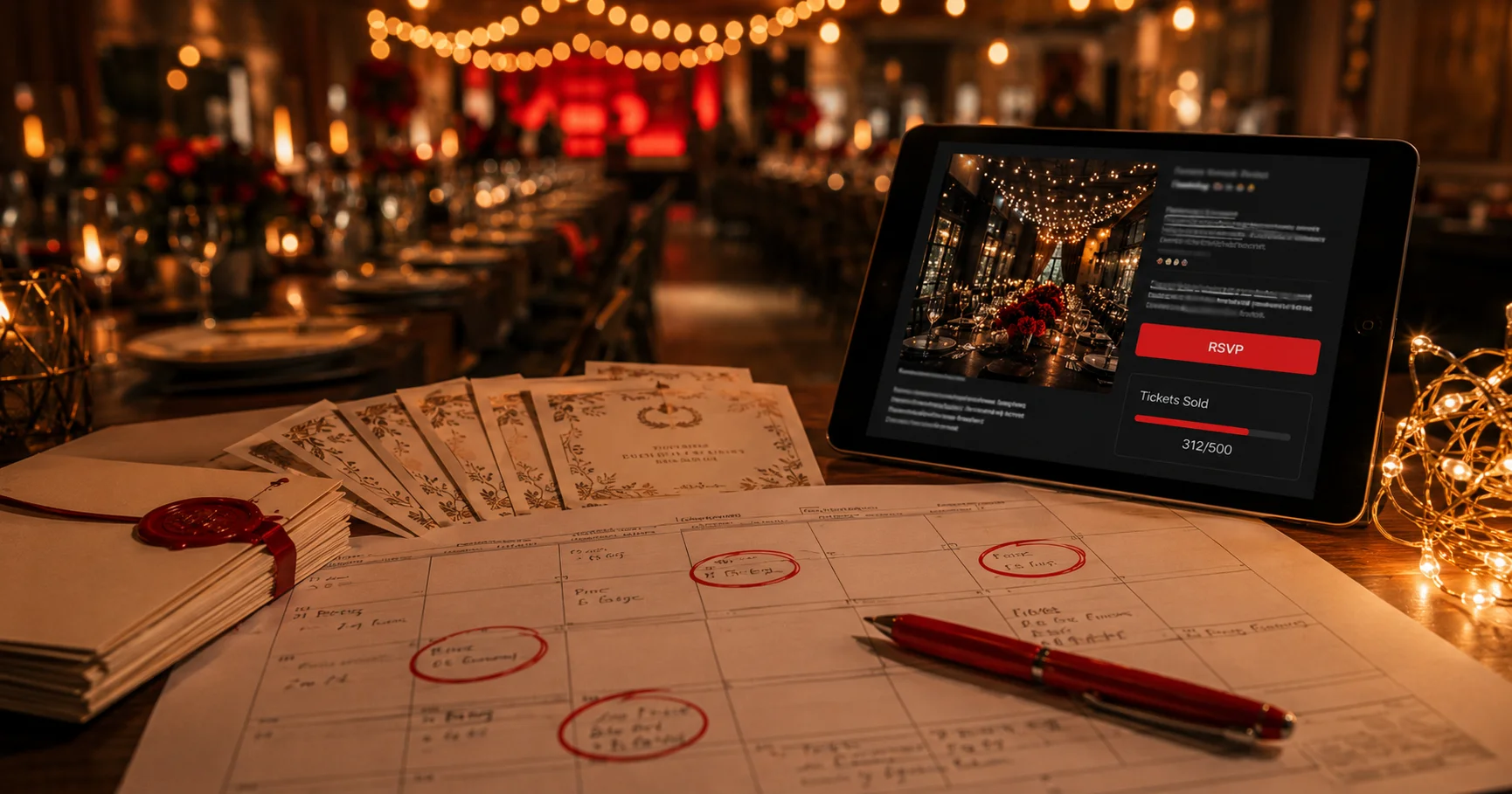
Restaurant events transform your business from transactional dining into a community destination that builds loyal customers and generates predictable recurring revenue. Wine dinners, cooking classes, live music nights, and private events can contribute 20-40% of monthly revenue when executed strategically.
After managing event marketing for restaurants across USA, UK, Canada, and Australia—from intimate chef's table experiences to 200+ person ticketed dinners—I've refined a proven framework that consistently delivers $50,000+ monthly event revenue for restaurants of all sizes.
This comprehensive guide shows you how to plan, promote, and execute profitable events using platforms like MegaTix and Eventbrite, with marketing strategies that fill seats and build community around your brand.
Need Event Marketing Strategy?
I help restaurants plan and promote profitable events that build community and drive revenue. Let's create your event calendar.
Get Event StrategyWhy Restaurant Events Drive Outsized Returns
Events create multiple revenue opportunities beyond standard dining operations while building emotional connections that drive customer lifetime value.
The Economics of Restaurant Events
Compare standard dinner service versus ticketed wine dinner:
Standard Dinner:
- Table spends $120
- Food cost 32% = $38
- Labor standard rates
- Customer may not return for months
Wine Dinner Event:
- Ticket price $95 per person
- Table of 4 = $380 guaranteed revenue
- Food cost 28% (economies of scale) = $106
- Wine cost sponsored or low markup
- Customers become brand ambassadors, return regularly
Events deliver higher per-seat revenue with guaranteed reservations, lower no-show rates, and passionate customers who promote your restaurant organically.
Beyond Direct Revenue
Successful events generate value beyond ticket sales:
- Customer Acquisition: Event attendees become regular diners (60-70% conversion rate)
- Database Building: Capture emails and preferences for ongoing marketing
- Social Proof: Event photos and attendee posts create organic marketing content
- Media Attention: Unique events attract press coverage and influencer attention
- Community Building: Transform transactional customers into loyal community members
High-Profit Event Types for Restaurants
Different event formats work for different restaurant concepts and customer demographics. Choose events that align with your brand and capabilities.
Wine & Spirit Pairing Dinners
Format: Multi-course tasting menu with paired wines or spirits
Ticket Price: $75-150 per person
Capacity: 20-60 guests
Frequency: Monthly or quarterly
Keys to Success:
- Partner with wine/spirit distributors who sponsor product
- Chef creates special menu showcasing seasonal ingredients
- Sommelier or brand ambassador educates guests between courses
- Limited capacity creates exclusivity and urgency
Wine dinners work exceptionally well in markets like Napa, New York, London, and Sydney where wine culture is established.
Cooking Classes & Chef Demonstrations
Format: Hands-on cooking instruction or chef demonstration
Ticket Price: $65-125 per person
Capacity: 12-20 participants
Frequency: Weekly or bi-weekly
Keys to Success:
- Focus on signature dishes or techniques customers want to learn
- Include meal, wine, and recipe cards in ticket price
- Schedule during slow dayparts (Sunday brunch, Monday dinner)
- Upsell private class bookings for groups
Live Music & Entertainment Nights
Format: Dinner service with live entertainment
Structure: Ticketed or minimum spend
Capacity: Full restaurant
Frequency: Weekly (typically Thursday-Saturday)
Keys to Success:
- Book quality local musicians who attract dedicated followings
- Create special event menu with higher margins
- Promote heavily on social media and to musician's audience
- Consider cover charge or minimum spend requirement
Live music events drive consistent weekly traffic in markets like Nashville, Austin, Los Angeles, and UK cities with strong music scenes.
Private & Corporate Events
Format: Restaurant buyouts or private dining room events
Revenue: $3,000-25,000+ per event
Capacity: Varies by space
Frequency: Opportunistic based on bookings
Keys to Success:
- Develop private event packages with clear pricing
- Target corporate clients in business districts
- Offer A/V equipment, customized menus, branding opportunities
- Build relationships with event planners and corporate concierge services
Launch Your Event Marketing Program
I help restaurants create profitable event calendars and promotional strategies. Let's build events that drive revenue and community.
Get Event PlanEvent Ticketing and Management Platforms
Professional ticketing platforms streamline event management while providing marketing tools and payment processing.
Eventbrite for Restaurants
Best For: Public events, classes, large-scale dinners
Pros:
- Huge built-in audience discovering events organically
- Free for free events, simple percentage fee for paid
- Robust marketing tools and email automation
- Mobile app for easy check-in
Cons:
- Less customization than alternatives
- Fee structure adds to ticket cost (can be passed to buyers)
Pricing: Free + 3.5% + $1.59 per paid ticket
MegaTix Platform
Best For: Large events, festivals, multi-day experiences
Pros:
- Lower fees than Eventbrite for high-volume events
- Advanced features for complex event structures
- White-label options for brand consistency
Use Cases: Food festivals, restaurant week promotions, multi-location event series
Toast Events (for Toast POS Users)
Best For: Restaurants already using Toast POS
Pros:
- Seamless integration with POS system
- Customer data automatically added to loyalty program
- Built-in payment processing
Resy & OpenTable Events
Best For: Restaurants using these reservation platforms
Pros:
- Leverage existing customer database
- Integrated with reservation system
- No additional platform fees beyond standard commission
Event Promotion Strategy That Fills Seats
Great events fail without strategic promotion. Use multi-channel marketing to maximize ticket sales and build anticipation.
Email Marketing Campaign Structure
6 Weeks Before Event: Save-the-date announcement to full database
4 Weeks Before: Ticket sales launch with early-bird pricing
2 Weeks Before: Reminder email highlighting remaining tickets
1 Week Before: Final call email with urgency messaging
Day Before: Logistics email to registered attendees
Segment emails by customer behavior—past event attendees, high-value customers, recent first-time diners—for personalized messaging that drives higher conversion.
Social Media Promotion Timeline
Instagram Strategy:
- Announcement post with event details and ticket link
- Behind-the-scenes content (menu planning, wine selection, setup)
- Countdown stories in final week
- Live event coverage and attendee features
- Post-event highlights and testimonials
Facebook Events:
- Create detailed Facebook event with ticket link
- Invite relevant customers and encourage sharing
- Post updates and engage with interested users
- Run targeted ads to local food enthusiasts
Paid Advertising for Event Promotion
Strategic paid advertising fills remaining seats and builds event attendance habit:
Meta Ads: Target local food enthusiasts, wine lovers, past customers with event-specific campaigns. Budget $200-500 per event.
Google Ads: Target searches like "wine dinner [city]," "cooking classes near me," "date night events [location]."
Local Partnerships: Partner with complementary businesses (wine shops, cooking stores, lifestyle blogs) for cross-promotion.
Event Execution Best Practices
Perfect planning means nothing without flawless execution. These operational details separate memorable events from disasters.
Pre-Event Checklist
- 72 Hours Before: Send reminder email with parking, dress code, menu preview
- 48 Hours Before: Confirm final headcount with kitchen
- 24 Hours Before: Prep all possible food components
- Day Of: Test A/V equipment, arrange seating, brief staff on event flow
During Event Excellence
- Assign dedicated event manager coordinating all aspects
- Capture professional photos and video throughout evening
- Encourage social sharing with branded hashtags
- Collect feedback through comment cards or QR code surveys
- Mention upcoming events and capture interest for next
Post-Event Follow-Up
Within 24 Hours:
- Send thank-you email to all attendees
- Share event photos on social media
- Post highlights to Instagram Stories and Reels
Within 1 Week:
- Announce next event date with early access for past attendees
- Send personalized offers encouraging return visit for regular dining
- Add attendees to VIP event list for future priority access
Building a Sustainable Event Program
One-off events generate short-term revenue. Systematic event programming builds predictable income streams and community.
Annual Event Calendar Template
Monthly Recurring: Wine dinner series (first Wednesday of each month)
Quarterly Signature: Seasonal tasting menus (spring, summer, fall, winter)
Holiday Tentpoles: Valentine's Day, Mother's Day, Thanksgiving, New Year's Eve
Special Occasions: Chef anniversary celebration, restaurant milestone events
Weekly Consistent: Live music Thursday-Saturday, cooking class Sundays
Consistency trains customers to expect and plan around your events. Monthly wine dinner attendees block first Wednesday every month, creating guaranteed recurring revenue.
Scaling Private Event Business
Private events provide high-revenue, low-marketing opportunities:
- Create tiered private event packages ($3K, $7K, $12K+)
- Develop relationships with corporate event planners
- List on private event marketplaces (The Vendry, PartySlate)
- Showcase private event success on dedicated website page
- Offer weekday lunch/afternoon slots for corporate groups
Restaurants successfully building private event business generate $20,000-50,000+ monthly from this channel alone.
Making Events Your Revenue Engine
Event marketing transforms restaurants from commodity dining into experiential destinations that build passionate communities and generate predictable revenue.
Start simple—one monthly wine dinner or quarterly chef's table. Master execution and promotion. Build attendee database. Scale to weekly events and private bookings as demand grows.
The restaurants achieving $50,000+ monthly event revenue didn't start there. They began with one successful event, learned from feedback, refined execution, and systematically built event programming into core business strategy.
Your events should do more than fill seats on slow nights—they should build emotional connections that transform first-time guests into lifelong ambassadors who fill your restaurant regardless of what day or time you're open.
Build Your Event Marketing Program
I help restaurants across USA, UK, Canada, and Australia create profitable event strategies that build community and drive revenue. Let's design your event calendar and promotion plan.
Frequently Asked Questions
How do I price restaurant events profitably?
Calculate all costs (food, beverage, labor, platform fees) then add 40-50% margin. Wine dinners typically $75-150 per person, cooking classes $65-125, private events $75-200+ per person depending on market and concept. Test pricing and adjust based on sell-through rate.
What's the best platform for selling event tickets?
Eventbrite works well for most restaurants due to built-in audience and simple setup. Toast Events ideal if already using Toast POS. MegaTix better for large-scale or multi-location events. Choose platform matching your event scale and technical capabilities.
How far in advance should I promote events?
Launch ticket sales 4-6 weeks before event. Announce save-the-date 6-8 weeks early to VIP list. Final promotional push in last 7-10 days. Adjust timeline based on event size—larger events need longer promotion runway.
Can small restaurants profit from events?
Absolutely. Intimate 20-person wine dinners or 12-person cooking classes work perfectly for small spaces. Focus on premium pricing and exceptional experience rather than volume. Many small restaurants generate $10,000-20,000 monthly from well-executed small events.
How do I build recurring event attendance?
Create consistent schedule (same day monthly), deliver exceptional experiences that exceed expectations, capture attendee emails for direct marketing, offer early access or discounts to repeat attendees, build community through exclusive Facebook groups or email lists.
Put this into practice
These are the services where I do this work for hospitality clients: